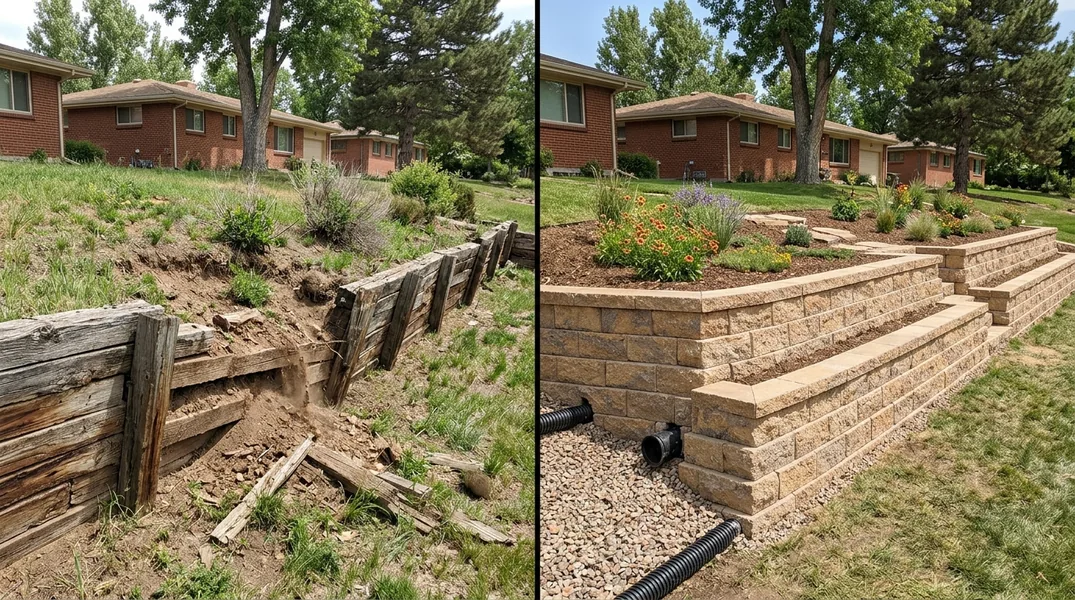
The Hidden Threat: How Water Destroys Retaining Walls
Every spring in Denver, thousands of homeowners face a silent crisis unfolding behind their retaining walls. While they focus on visible damage like cracks or bulging, the real culprit operates out of sight: water accumulation and the relentless force it creates against the wall structure. Many property owners don't realize that a properly constructed retaining wall is only half the battle. Without adequate retaining wall drainage, even the strongest wall will eventually fail.
The problem intensifies during Colorado's unique weather patterns. Heavy snowmelt from the Rocky Mountains and sudden summer cloudbursts dump enormous volumes of water onto hillsides and sloped properties throughout the region. When this water has nowhere to go, it pools behind the retaining wall, creating tremendous pressure that pushes against the structure from behind. This phenomenon, known as hydrostatic pressure, is one of the leading causes of retaining wall failure. Homeowners who neglect drainage solutions often find themselves facing costly Retaining Wall Repair or complete Retaining Wall Replacement within just a few years of installation.
Understanding Hydrostatic Pressure and Its Impact on Retaining Walls
Hydrostatic pressure is the force exerted by standing water against a vertical or near-vertical surface. For retaining walls, this pressure increases with the depth of water accumulation. A wall that holds back soil at a 45-degree angle may seem stable, but introduce saturated soil behind it, and the pressure multiplies exponentially. The weight of water-logged earth pressing against the back of your wall creates forces that push outward, straining the structure's integrity and eventually leading to failure if not properly managed.
In Denver and surrounding areas, spring snowmelt is particularly problematic. As snow accumulated throughout winter melts rapidly during warming periods, massive volumes of water flow downhill. If your property sits on a slope, this water naturally collects behind any retaining wall you've built. Without a strategic drainage system in place, that water saturates the soil, increases its weight, and amplifies the lateral pressure on your wall. During summer monsoon season, the same issue repeats when intense cloudbursts drop inches of rain in minutes. The result is a wall under constant, severe stress that it was never designed to withstand without proper drainage infrastructure.
Why Retaining Wall Drainage Systems Are Non-Negotiable
A well-designed retaining wall drainage system serves as the wall's lifeline. Its primary job is to intercept water before it accumulates behind the wall and to direct that water safely away from the structure. Without drainage, water becomes trapped, soil becomes saturated, and hydrostatic pressure builds to dangerous levels. The good news is that modern drainage solutions are proven, reliable, and cost-effective when installed during the initial Retaining Wall Installation.
The most effective drainage approach combines multiple strategies working together. Perforated pipes placed at the base of the wall collect water and channel it away. A gravel backfill layer behind the wall allows water to flow freely rather than pooling in soil. Geotextile fabrics prevent soil from clogging the drainage system. And in many cases, a retaining wall french drain system is installed to proactively manage groundwater and surface water runoff. When these components work in concert, they maintain soil stability, reduce pressure on the wall, and extend the structure's lifespan by decades.
The French Drain Solution: How It Works for Retaining Walls
A retaining wall french drain is a specialized drainage system designed to handle the unique challenges of slope properties. Unlike standard drainage, a French drain typically runs along the top of the slope or horizontally across the property uphill from the wall. It intercepts water before it reaches the wall, directing it safely downhill or to a designated drainage outlet. This proactive approach prevents water from ever accumulating behind the structure in the first place.
The system works by collecting surface water and shallow groundwater in a perforated pipe surrounded by gravel and filtered by geotextile fabric. As water moves through the gravel, soil particles are filtered out, preventing clogs. The perforated pipe then channels clean water away from the retaining wall to a safe discharge point. For Denver-area properties experiencing heavy snowmelt or summer cloudbursts, a French drain system is often the difference between a wall that lasts 50 years and one that fails within a decade. The investment in proper drainage during installation is far less expensive than emergency repairs or complete replacement later.
Seasonal Water Challenges in the Denver Area
Denver's climate presents unique challenges for retaining wall drainage. Spring typically brings rapid snowmelt as temperatures climb and solar radiation intensifies. Properties at higher elevations or on north-facing slopes experience even more dramatic melt events. Simultaneously, the region's soil composition often includes clay layers that don't drain well naturally, meaning water gets trapped more easily. Summer adds another threat: afternoon thunderstorms can dump several inches of rain in minutes, creating flash runoff that overwhelms poorly designed drainage systems.
The combination of these seasonal patterns means that retaining walls in the Denver area face more stress than walls in flatter, drier climates. A wall that might survive without drainage in Arizona could fail within years in Colorado. This is why working with local professionals who understand Denver's specific water challenges is so important. When you're planning a new retaining wall or assessing an existing one, consider how seasonal water patterns will affect your structure. If you're unsure whether your current wall has adequate drainage, it's worth getting a professional evaluation. Contact Denver Retaining Wall at (983) 955-0165 to discuss your situation and get a free estimate for any needed improvements.
Signs Your Retaining Wall Lacks Proper Drainage
Several visible warning signs indicate that your retaining wall may be suffering from inadequate drainage. Look for water seeping or pooling at the base of the wall after rain or snowmelt. Notice any bulging or tilting of the wall structure, which typically indicates pressure buildup behind it. Horizontal or stair-step cracks in the wall surface are another red flag, suggesting the wall is being pushed by accumulated water and soil weight. If you see vegetation growing unusually lush or wet spots appearing behind or below the wall, water is likely accumulating where it shouldn't.
Another indicator is if your wall was installed without visible drainage infrastructure. If you can't see any perforated pipes, gravel backfill, or drainage outlets, your wall likely lacks adequate protection. Some older walls or contractor-installed walls cut corners on drainage to save money upfront, creating problems that emerge years later. If you recognize any of these signs in your Denver-area property, don't wait for failure. Early intervention through drainage improvements or Retaining Wall Repair is far more cost-effective than dealing with a collapsed wall. Reach out to Denver Retaining Wall at (983) 955-0165 or request a free estimate to have your wall professionally assessed.
Looking for a professional retaining wall contractor in Denver? Denver Retaining Wall responds fast for all your retaining wall needs.
Get a Free QuoteOur services: Retaining Wall Installation · Retaining Wall Repair · Retaining Wall Replacement