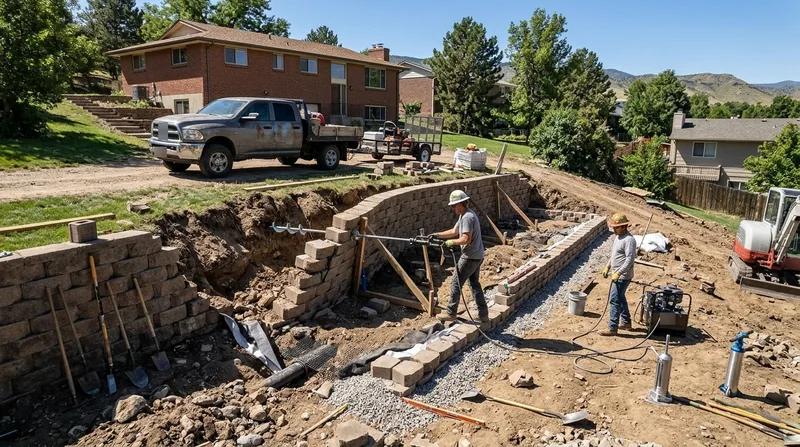




Retaining Wall Repair in Denver stops leaning, bowing, and cracked walls before they fail completely. Denver's high plains terrain, freeze-thaw cycles, and expansive bentonite clay create intense pressure on retaining walls built in the 1970s through 1990s. Moss rock boulders, railroad ties, landscape timbers, and segmental block walls that once held slopes now buckle and heave under spring snowmelt, summer cloudbursts, and the relentless swelling of wet clay. A wall pushed by frost or clay doesn't stabilize on its own, it gets worse each season. We diagnose the root cause, fix drainage, install tieback anchors, rebuild sections, or replace the entire wall so your property stays level and safe. Call (983) 955-0165 for a free estimate, or read on to learn how we repair walls across Denver, Aurora, Lakewood, Littleton, and the surrounding metro.
Why Retaining Wall Repair Matters in Denver: Clay, Frost, and Slope Failure
Denver sits on the high plains at the foot of the Front Range, where most residential lots slope toward creeks, bluffs, or the Platte valley. Retaining walls hold back soil on these sloped yards, but Denver's climate and geology punish them. Bentonite clay swells when wet and shrinks when dry, creating lateral pressure that pushes walls outward. Freeze-thaw cycles crack mortar and concrete. Frost heave lifts wall footings. Heavy wet spring snow and sudden summer storms saturate soil and overwhelm poor drainage. A wall that leans or bows today becomes a collapse waiting to happen. Repairing it now prevents costly replacement, protects your foundation or driveway, and keeps slopes stable.
- We stop wall movement caused by swelling clay and frost pressure before it spreads cracks through the entire structure.
- We install or correct drainage systems so water doesn't accumulate behind the wall and push it harder.
- We use tieback anchors, helical piles, and partial rebuilds to restore stability without demolishing the entire wall.
- We verify local permit requirements and work with Denver and surrounding jurisdictions to keep your repair compliant.
Early repair saves money and protects your property from slope failure, foundation damage, and erosion.
Key info: Denver's 1970s and 1980s timber and railroad tie walls are especially vulnerable to frost heave and clay pressure. Many homeowners in Harvey Park, Virginia Village, Lakewood, and Littleton discover wall failure after a heavy spring thaw or wet summer. The sooner you address a lean or crack, the more options you have to avoid full replacement.
For more details on what causes wall failure and how to spot it early, see our guide to Leaning and Collapsed Wall Repair. You can also find the Denver Building Department's permit thresholds and setback rules at denvergov.org/pocketgov, where walls above 4 feet or supporting a surcharge typically require a permit and possibly engineered drawings.
How We Repair Retaining Walls in Denver: Diagnosis to Restoration
Every retaining wall repair starts with a site visit to understand why the wall is failing. We look at soil type, drainage, wall material, age, and the direction and amount of movement. Then we recommend the repair method that restores stability with the least disruption. For minor cracks and slight leans, we may improve drainage and install tieback anchors. For severely bowed or heaving walls, we rebuild sections or the entire face. For failed timber and railroad tie walls, we often replace them with segmental block or poured concrete that will last decades longer.
- We excavate behind the wall to expose the footing, soil, and drainage system and assess structural damage.
- We install or repair French drains and perforated pipe so water flows away from the wall instead of pushing against it.
- We install tieback anchors, helical piles, or soil nails to anchor the wall to stable soil and prevent further movement.
- We rebuild or replace the wall face using the original material or a more durable alternative like segmental block.
- We backfill, compact, and restore drainage so the wall is stable and water management is permanent.
The entire process is planned to minimize disturbance to your yard, driveway, and surrounding landscape.
Local example: A Capitol Hill homeowner with a 1970s railroad tie wall leaning 3 inches into the yard had clay pressure and poor drainage. We exposed the footing, found it had settled 2 inches, installed a French drain to redirect water, and added tieback anchors to pull the wall back upright. The wall held for 18 months of monitoring, then we rebuilt the top 4 feet with segmental block to match the original look and ensure 30+ years of stability.
If your wall is severely damaged or you want to upgrade to a material that won't fail again, consider our Retaining Wall Replacement service. For walls with poor drainage that we can fix without rebuilding, see Retaining Wall Drainage.
Retaining Wall Repair Methods: Choosing the Right Approach
| Approach | Description | Best for |
|---|---|---|
| Drainage Repair | Install or repair French drains, perforated pipe, and surface grading so water drains away from the wall instead of pooling behind it. | Walls with minor cracks and slight movement caused by water pressure, especially those with failed or missing drainage. |
| Tieback Anchors | Install steel cables or rods anchored deep into stable soil or rock behind the wall to pull it back and prevent further outward movement. | Bowing or leaning walls that have moved a few inches but the structure is still sound; common in clay-heavy soils. |
| Helical Piles | Install helical piles (giant screws) deep into soil to anchor the wall footing and prevent frost heave and settlement. | Walls with heaving, sunken, or unstable footings due to frost cycles or poor compaction; prevents future movement. |
| Partial or Full Rebuild | Remove and rebuild the top section or entire wall using segmental block, poured concrete, or stone; install new drainage and footing. | Severely cracked, bowed, or failed timber and railroad tie walls; provides a fresh structure with modern drainage and 30+ year lifespan. |
Retaining Wall Repair Cost in Denver: What to Expect
Retaining wall repair costs in Denver range from $1,500 for minor drainage fixes and crack sealing to $8,000 to $15,000 for tieback anchors and partial rebuilds, and $15,000 to $40,000+ for full wall replacement. The price depends on wall height and length, soil type, degree of movement, access for equipment, whether the footing needs replacement, and the material you choose. A 20-foot section of moss rock wall with clay pressure and poor drainage might cost $3,500 to $6,000 to stabilize with drains and anchors. A failed 30-foot railroad tie wall might cost $12,000 to $20,000 to replace with segmental block. Always get two or three estimates so you understand the scope and can compare methods. See our full pricing page for more detail on individual repair types and material costs.
Factors that move the price up include difficult access (tight side yards, trees, utilities), poor soil conditions requiring deeper anchors or piles, tiered walls requiring engineering, and proximity to a driveway or structure that must be protected during work. If your wall is large, severely damaged, or requires engineered drawings for permit approval, we'll schedule a free on-site estimate so you get an accurate quote before any work begins. Call (983) 955-0165 to arrange your estimate.
Retaining Wall Repair Near Me: What Denver Homeowners Should Know When Hiring a Contractor
When you hire a contractor for retaining wall repair in Denver, Aurora, Lakewood, or Littleton, verify that they are licensed and insured for structural excavation and wall work in your city. Many jurisdictions require a permit for walls above 4 feet or walls supporting a driveway or structure, so ask your contractor to confirm local requirements and handle permitting. Check references from past wall repair jobs, not just general landscaping work, because wall repair requires different skills and equipment. Ask about drainage design, anchor installation, and how they will protect your property during excavation. If your wall is on a property line or near a neighbor's property, ask how setback rules apply. If you live in an HOA community, check your CC&Rs for restrictions on wall materials or height before repair begins.
We handle permitting with local building departments, provide references from past repairs, and give you a free, no-obligation estimate within 24 hours. Contact us today to schedule your site visit, or call (983) 955-0165 to ask questions before you book.
Retaining Wall Repair in Denver: Pricing Guide
| Service | Price | Details |
|---|---|---|
| Drainage repair and crack sealing | Starting at $1,500 | French drain installation, perforated pipe, surface grading, and minor crack filling to stop water pressure and slow wall movement. |
| Tieback anchors or soil nails | Starting at $3,500 | Drilling and installing steel anchors deep into stable soil to pull back bowing or leaning walls; price varies by wall length and anchor depth. |
| Partial wall rebuild (top section) | Starting at $6,000 | Remove and rebuild 4 to 8 feet of failed wall face, install new drainage and footing; cost depends on wall length and material choice. |
| Full wall replacement | Starting at $15,000 | Complete removal and rebuild of entire wall, new footing, drainage, and modern materials like segmental block or poured concrete; price scales with height and length. |
| Travel and estimate | Included and free | No travel fee in Denver and surrounding areas; free on-site estimate within 24 hours, no obligation to book our repair service. |
Indicative pricing, the exact cost depends on square footage, finish, and site access. Free personalized estimate within 24h at (983) 955-0165.


