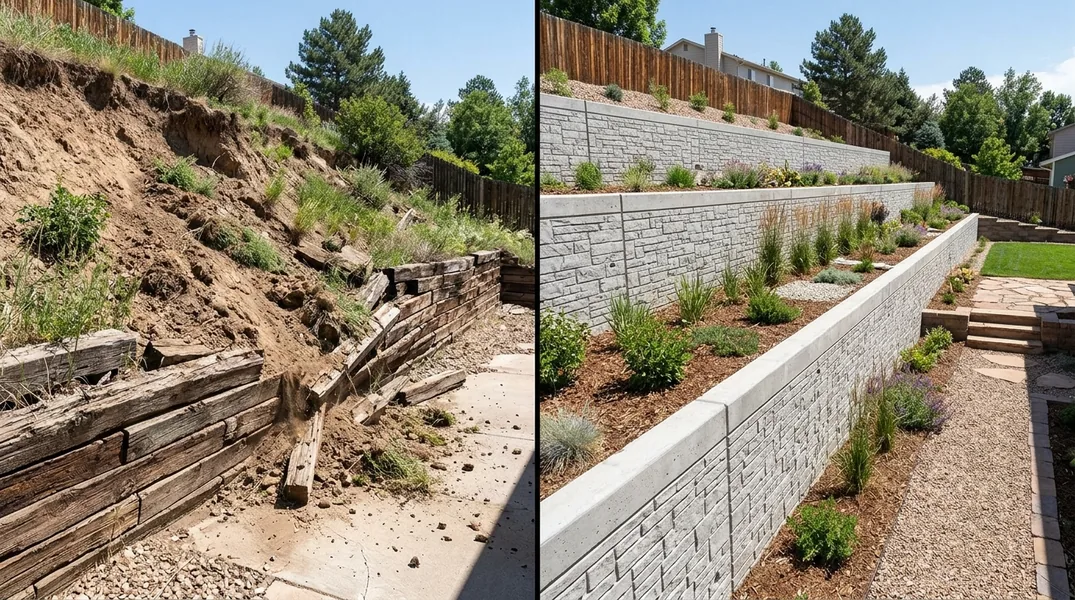
Understanding Denver's Unique Soil and Climate Challenges
Living in Denver means contending with some of the most challenging soil and weather conditions in the country. The region sits atop expansive clay soils that swell when wet and shrink when dry, creating tremendous pressure on retaining structures. Add to this the intense freeze-thaw cycles that Colorado experiences each winter, and you have a recipe for rapid deterioration if your retaining wall isn't built from the right materials.
When water freezes in soil, it expands, pushing against whatever contains it. This freeze-thaw action can crack, shift, and destabilize poorly chosen materials. Homeowners and property managers in Denver need to select materials that can withstand both the relentless pressure from expansive soils and the physical stress of repeated freeze-thaw cycles. The good news is that several proven materials have been engineered and tested specifically for these conditions, and understanding your options is the first step toward a durable, long-lasting retaining wall.
Concrete Retaining Walls: Strength and Durability for Colorado
Concrete Retaining Walls are among the most popular and reliable choices for Denver properties. Poured concrete offers exceptional compressive strength, meaning it resists the outward pressure from expansive clay soils far better than wood or softer materials. When properly reinforced with steel rebar and designed with adequate drainage, concrete walls can handle the intense freeze-thaw cycles that Colorado throws at them year after year.
The key to concrete success in our climate is proper installation and drainage design. Without adequate drainage behind the wall, water accumulates and creates hydrostatic pressure that can crack even the strongest concrete. Additionally, air-entrained concrete (concrete with tiny air pockets designed to resist freeze-thaw damage) is specifically formulated for regions like Colorado. When you invest in Retaining Wall Installation with a qualified contractor, they'll ensure your concrete wall includes these critical specifications.
Segmental Block Retaining Walls: Flexibility Meets Performance
Segmental retaining walls, built from interlocking concrete blocks, offer a different advantage in Colorado's challenging environment. Unlike monolithic poured concrete, these modular systems can flex slightly with soil movement and freeze-thaw action. This flexibility, combined with the strength of modern engineered concrete blocks, makes segmental systems an excellent choice for expansive clay soils.
One of the biggest advantages of segmental block retaining walls is their drainage capability. The hollow cores and open-back design allow water to pass through more freely than solid concrete, reducing the hydrostatic pressure that causes failure. These walls are also easier to repair if a section is damaged, making them cost-effective over the long term. In Denver's variable climate, this combination of performance and maintainability has made block walls increasingly popular for both residential and commercial projects.
Moss Rock Retaining Walls: Natural Beauty with Proven Durability
For homeowners seeking aesthetic appeal without sacrificing performance, moss rock retaining walls offer an excellent middle ground. Moss rock, also called lichen-covered stone, provides a natural, rustic appearance while maintaining solid structural integrity when properly installed. The natural stone is extremely durable and resists freeze-thaw damage better than many assume, especially when laid with proper mortar and drainage considerations.
Moss rock walls work particularly well in Denver for smaller landscaping projects and accent walls. The stone's irregular shape and natural color variations create visual interest that complements both modern and traditional home designs. However, larger structural walls or those bearing significant load should generally be reserved for concrete or segmental block systems. If you're considering moss rock for your property, discussing your specific soil conditions and wall height with a professional is essential to ensure the design meets both your aesthetic and structural needs.
Comparing Materials: Which Is Best for Your Denver Property
Choosing between concrete, segmental block, and moss rock depends on several factors specific to your property. Wall height is one consideration: taller walls typically require the strength of poured concrete or engineered segmental systems. Soil conditions matter too; if your property has particularly expansive clay, concrete or block systems provide more predictable performance. Budget considerations also play a role, though the cheapest option upfront isn't always the most economical over time.
Drainage design is critical regardless of material choice. All three options can fail if water management isn't properly addressed. Concrete walls need perforated drain pipe behind them. Segmental blocks rely on their open-back design but still benefit from drainage infrastructure. Moss rock walls require careful grading and possibly French drains to prevent water accumulation. The material itself is only part of the equation; proper installation with attention to site-specific drainage and soil conditions determines whether your wall will last decades or fail within years.
Retaining Wall Installation Cost in Denver: What to Budget
Understanding pricing for retaining wall projects helps you make informed decisions. Concrete walls typically cost more per linear foot than segmental block systems, but their longevity often justifies the investment. Segmental block offers a middle ground in cost while providing excellent durability. Moss rock walls vary widely depending on the stone quality and whether you're building a structural wall or a decorative accent.
Several factors influence total project cost beyond material choice: wall height, site accessibility, soil conditions, and necessary drainage work all affect the final price. A taller wall or one requiring extensive site preparation will cost more regardless of material. Properties with poor existing drainage will need additional investment in drainage solutions. Rather than comparing material costs in isolation, evaluate the total installed cost and expected lifespan. A more expensive concrete wall that lasts 50 years may be more economical than a cheaper option requiring Retaining Wall Repair or Retaining Wall Replacement within 15 years. Contact Denver Retaining Wall at (983) 955-0165 for a free estimate tailored to your specific project.
Professional Installation Near Me: Why Expert Design Matters
Material selection is only part of the equation; professional design and installation are equally critical for success in Denver's challenging environment. A qualified contractor will conduct a soil analysis, evaluate drainage patterns, and design your wall with proper reinforcement and specifications for Colorado's climate. This expertise prevents costly failures and ensures your wall performs as intended.
Denver Retaining Wall brings decades of experience installing retaining walls that withstand our region's unique challenges. Whether you're building a new wall or evaluating options for a troubled existing structure, professional guidance ensures you choose materials and methods appropriate for your specific site. The difference between a DIY approach or hiring an inexperienced contractor versus working with specialists often determines whether your wall becomes a reliable landscape feature or a costly problem. Reach out to Denver Retaining Wall at (983) 955-0165 to discuss your project and learn which materials and design approach will best serve your property long-term.
Looking for a professional retaining wall contractor in Denver? Denver Retaining Wall responds fast for all your retaining wall needs.
Get a Free QuoteOur services: Retaining Wall Installation · Retaining Wall Repair · Retaining Wall Replacement